
Local Products: Flavours of Riomaggiore and Manarola


A journey in Riomaggiore e Manarola also passes through the table: from the aroma of freshly baked focaccia to the intense flavour of anchovies, from extra virgin olive oil poured over bread to the freshness of lemons grown in vegetable gardens and small courtyards.
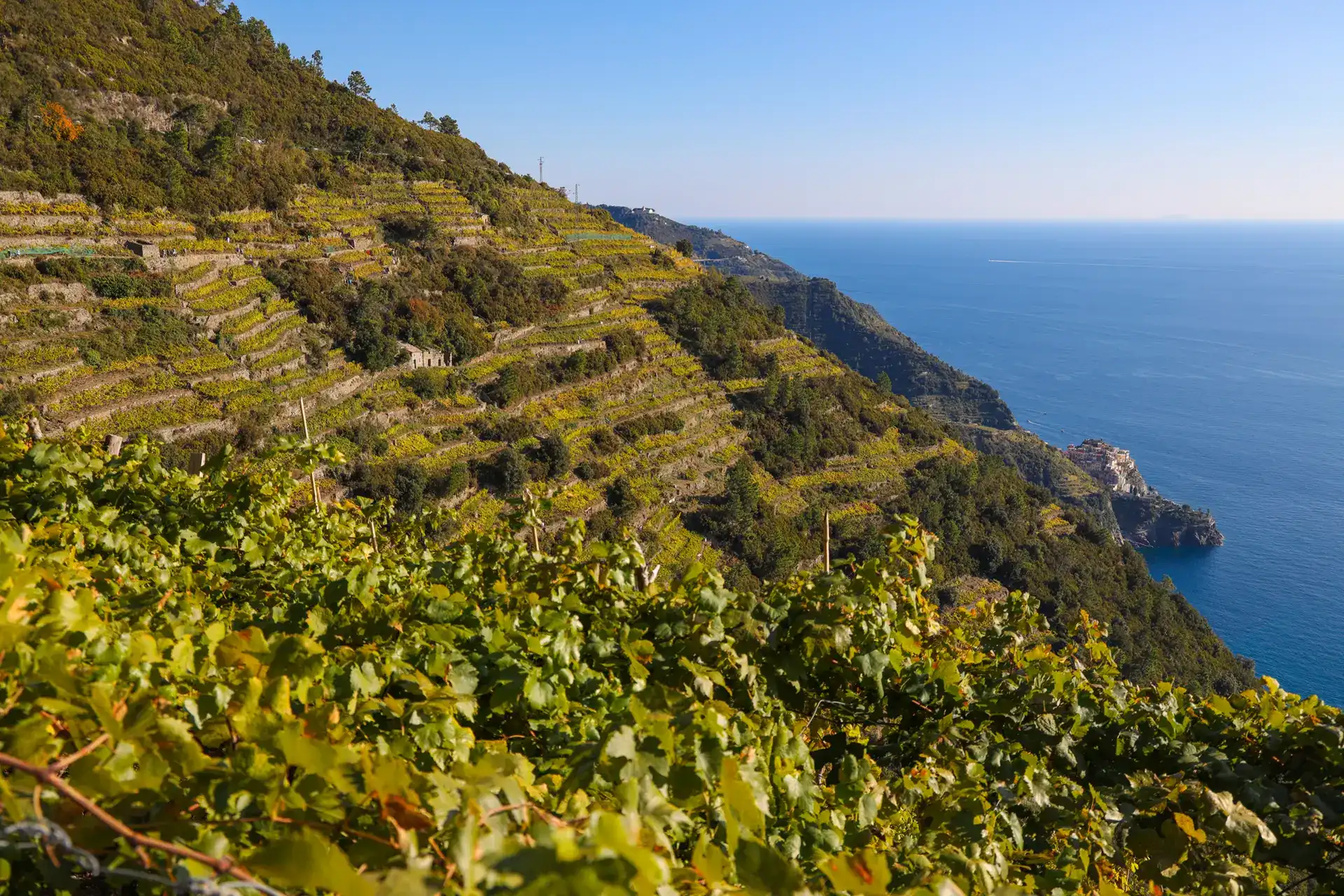
Here, local products are not simply specialities to taste. They are clues that help you read the territory. They speak of the sea, cultivated slopes, Mediterranean scrub, the everyday cooking of the villages and the ability of local communities to transform what the landscape offers into simple, recognisable and deeply Ligurian flavours.
In this article, we guide you through some of the most representative food products of the Cinque Terre: the ones to look for in restaurants, shops, farms and during your pauses along the way.
For wines — from Cinque Terre DOC to Sciacchetrà — we have prepared a dedicated article .
They deserve a story of their own…
1. Extra virgin olive oil
The flavour of the slopes
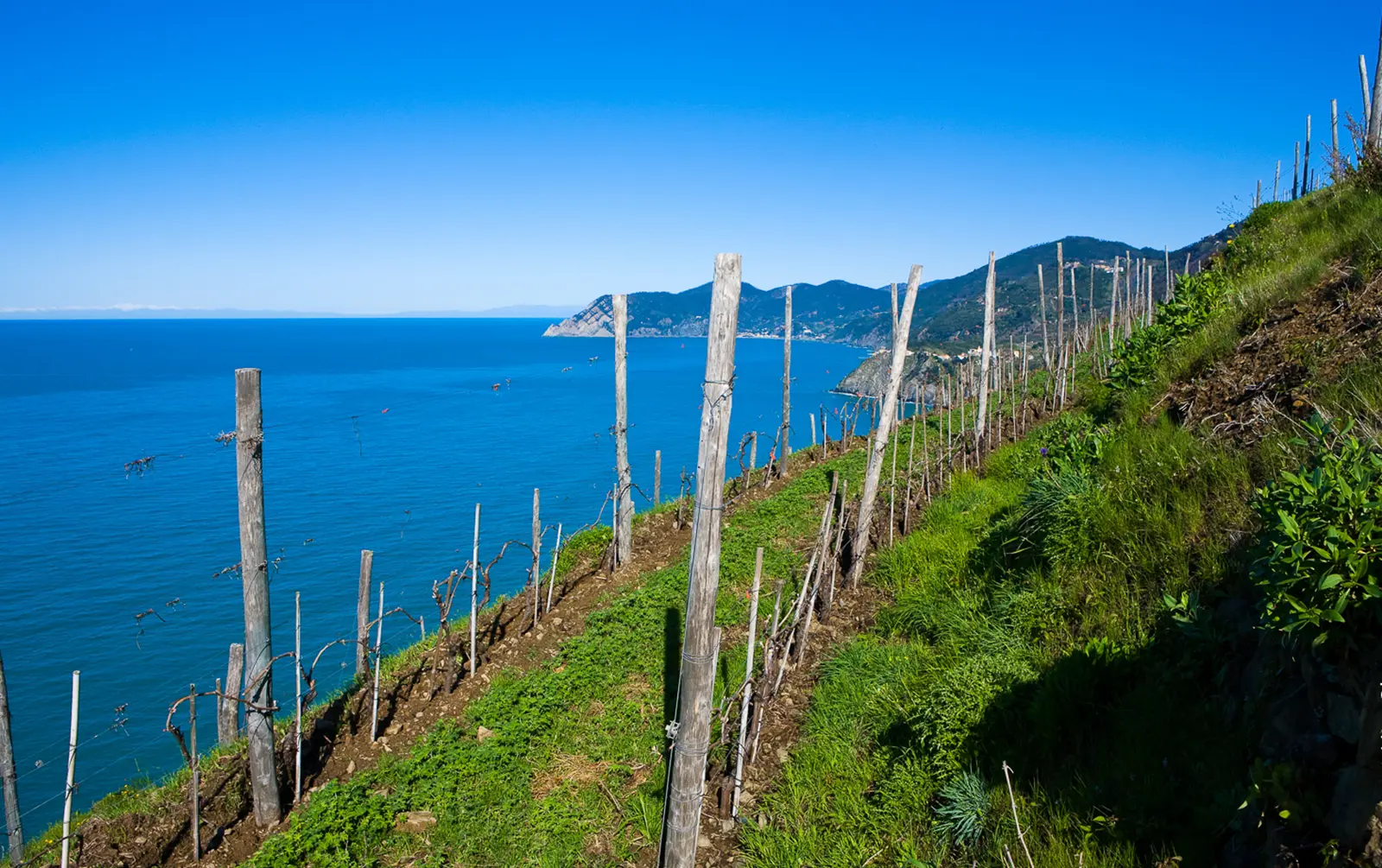
Even before it reaches the table, olive oil tells the story of the landscape. Olive trees grow alongside vineyards, on the slopes rising from the sea, often in small plots that are difficult to reach and cultivate. Production is limited and closely linked to the care of the land and the continuity of an agricultural tradition that endures among steep hillsides, dry-stone walls and the Mediterranean climate.
Cinque Terre extra virgin olive oil is produced from olives delivered by farmers living within the protected area.
The best way to appreciate it is raw: on a slice of bread, on focaccia, over simple vegetables or with a fish dish. It does not try to dominate, but to accompany. And precisely for this reason, it is one of the flavours that best expresses Ligurian cuisine: essential, precise and closely connected to the quality of its ingredients.
Where to look for it: farms, local shops, restaurants that highlight local products.
2. Salted anchovies
The sea, preserved
Anchovies are one of the flavours most deeply connected to coastal Liguria. In the Cinque Terre, Monterosso salted anchovies are recognised as a traditional product and are prepared according to an ancient local recipe. They are also known as pan du ma, “bread of the sea”.
Although their name refers to Monterosso, they belong to the food culture of the whole area. They speak of fishing, preservation, everyday cooking and clear, intense flavours. They are simple, but never ordinary: they bring to the table the most maritime side of the Cinque Terre, made of essential gestures and a direct relationship with the sea.
Try them with olive oil and bread, as an appetiser, or in dishes where oily fish remains the main character. Their intense flavour is perfect for understanding a cuisine that does not need to be complicated in order to be memorable.
Where to taste them: seafood appetisers, trattorias, food shops.
3. Lemons
The Mediterranean scent of the villages
Some flavours reach the nose before the palate. Lemon is one of them. You can imagine it in small gardens, in vegetable plots protected by walls, along stairways and in the sunniest corners of the villages. It is a discreet but unmistakable presence, immediately evoking the fresher, more Mediterranean side of the Cinque Terre.
Lemon cultivation has been documented in this area since the 17th century. This fruit is used to make jams, biscuits, tarts, desserts and limoncino, transforming a simple ingredient into a small memory of the journey.
To taste it means looking for it in the details: in a dessert, an artisan preserve, a local liqueur or a citrus note accompanying fish. More than just an agricultural product, the lemon tells the domestic and sunny side of the villages: courtyards, gardens, sun-warmed walls and scents that linger in the air.
Where to taste it: desserts, jams, artisan liqueurs, fish dishes.
4. Cinque Terre honey
The sweetness of Mediterranean scrub
Honey is perhaps the quietest product in this story, but also one of the most evocative. It comes from the variety of local vegetation, from coastal environments and from the Mediterranean scrub that accompanies many trails. It is part of the typical products of the Cinque Terre because it is connected to the natural and floral richness of the territory.
Tasting it means rediscovering, in a sweet and concentrated form, the scents often encountered while walking: flowers, herbs, resins, seasons. It is a small product, easy to take home, and able to tell the story of the Park’s biodiversity and the relationship between nature and local production.
Where to look for it: shops, farms, small producers, local markets.
5. Pesto
The green soul of Liguria on the plate
Pesto is one of the most recognisable flavours of Liguria. Although it does not originate specifically from Riomaggiore or Manarola, it belongs to the gastronomic world that accompanies a journey through the Cinque Terre: basil, olive oil, garlic, pine nuts and cheese come together in an essential, fragrant sauce immediately linked to Ligurian cuisine.
Tasting it here means placing it within the landscape: after a walk, in a trattoria, with fresh pasta or in a simple dish. It is a familiar flavour, but in this territory it takes on a special value, because it speaks with the olive oil, aromatic herbs, vegetable gardens and home cooking of the region.
Where to look for it: trattorias, restaurants, food shops.
6. Focaccia, farinata and savoury pies
The simple pause
Between a trail, a train to catch and a view over the sea, some flavours naturally accompany the journey. They are the ones you find in bakeries, focaccia shops and small food stores: a slice of still-warm focaccia, a piece of farinata, a vegetable pie or a rice pie to eat even cold, without rushing.
They belong to the Ligurian and La Spezia food tradition that is also found in the villages along the coast. Farinata, made with chickpea flour, water, olive oil and salt, is one of the simplest and most recognisable flavours of Ligurian bakery cuisine. Savoury pies, on the other hand, tell the story of humble, domestic cooking, created to make the most of seasonal vegetables, herbs, rice and a few other ingredients.
These flavours may be less scenic than a dinner overlooking the sea, but they are often closer to the real rhythm of the journey. You choose them for a quick lunch, an informal break or something practical to take with you before a walk. They tell of a practical, essential cuisine, capable of transforming simple ingredients into dishes full of character.
Try this: if you find it, taste farinata with pesto and stracchino cheese. The warmth of the farinata meets the creaminess of the stracchino, while the pesto adds a fragrant and unmistakably Ligurian note.
Breakfast tip: to feel a little Ligurian, try dipping focaccia in your cappuccino. It may sound unusual, but the contrast between the olive oil and savoury flavour of fügassa and the creamy sweetness of cappuccino is a much-loved morning ritual in Liguria. It is also a good reason to spend the night in Riomaggiore or Manarola: wake up early, head down to the bakery, pick up freshly baked focaccia and enjoy breakfast slowly before the day’s crowds arrive.
Where to look for them: bakeries, focaccia shops, delis, small food stores.
Continue your journey through local flavours!
Tasting Riomaggiore and Manarola means bringing together many fragments: the sea of the anchovies, the slopes of the olive oil, the scent of lemons, the Mediterranean scrub of honey, the simplicity of focaccia, the green of pesto, and the everyday cooking of bakeries and small shops.
Not everything that arrives on the table is produced exclusively in the two villages, but every flavour can help you understand the journey better. Some products are directly connected to the Cinque Terre; others speak more broadly of Liguria and the province of La Spezia. Together, they create a food experience made of simple gestures, slow pauses and recognisable flavours.
During your visit, it is worth looking for local products, small producers, carefully selected shops and restaurants that work with attention. Not to turn the journey into a checklist of things to taste, but to let yourself be guided by what the territory can tell you through its food.