
The Colourful Tower Houses of Riomaggiore and Manarola


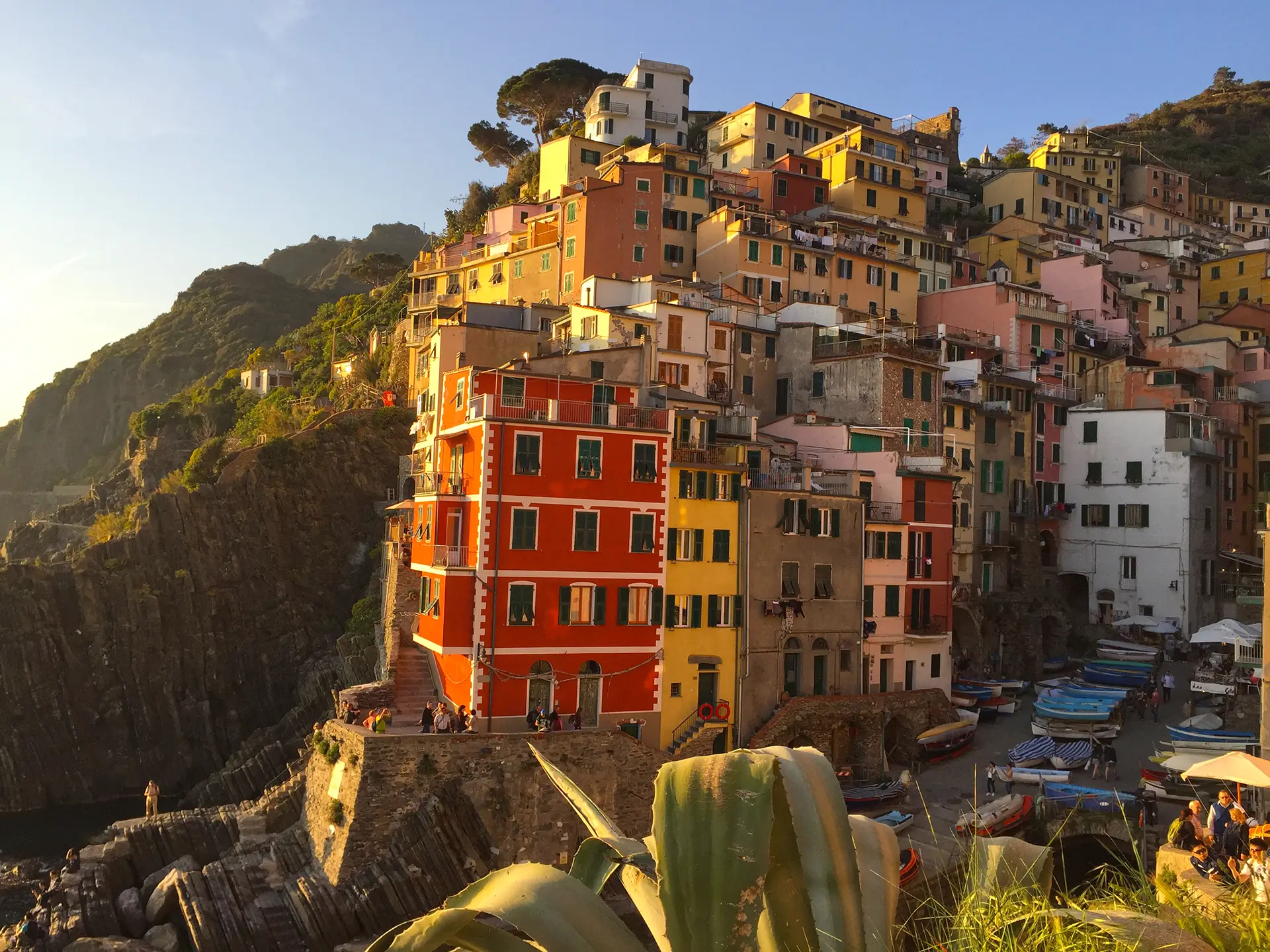
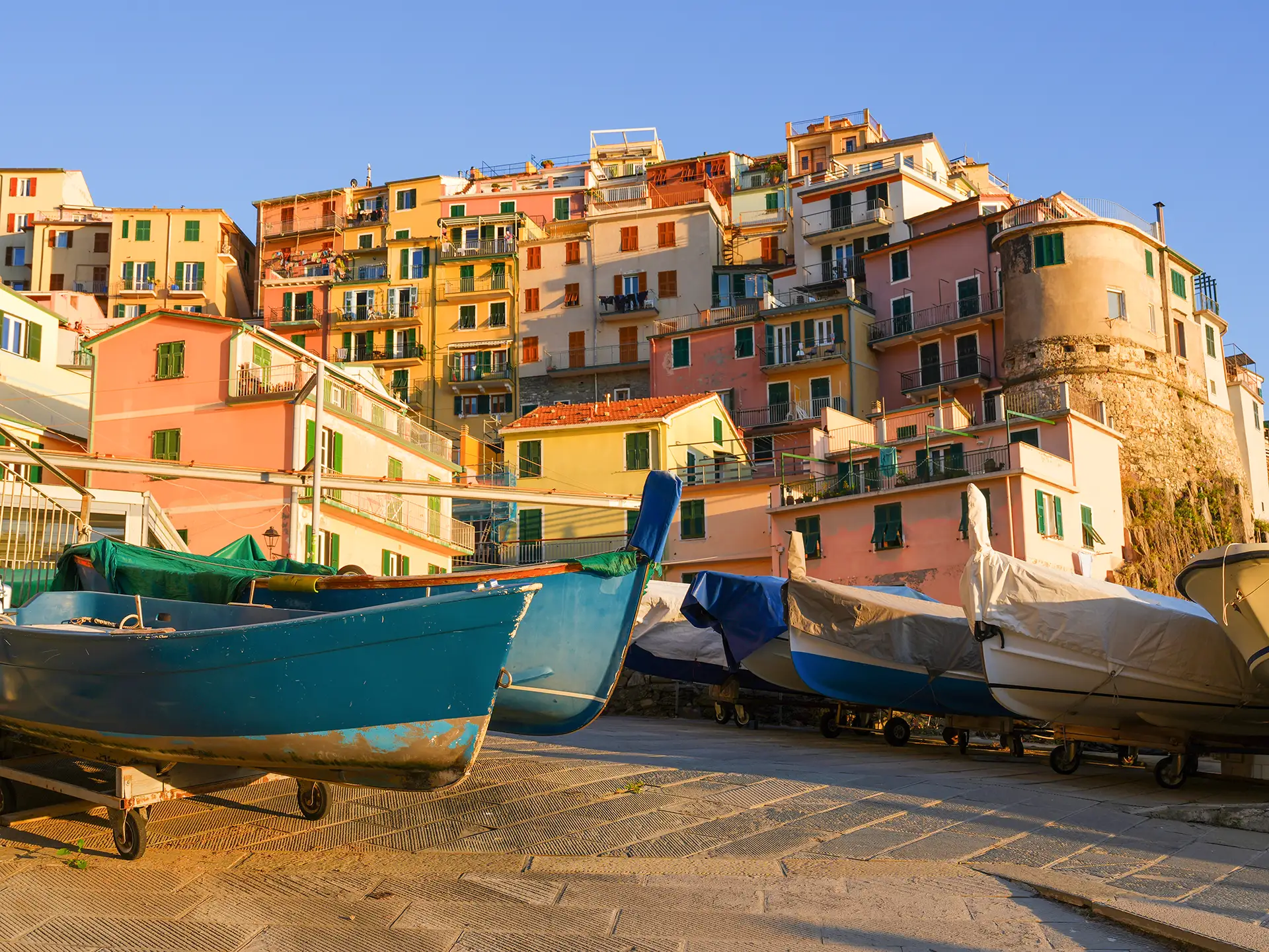
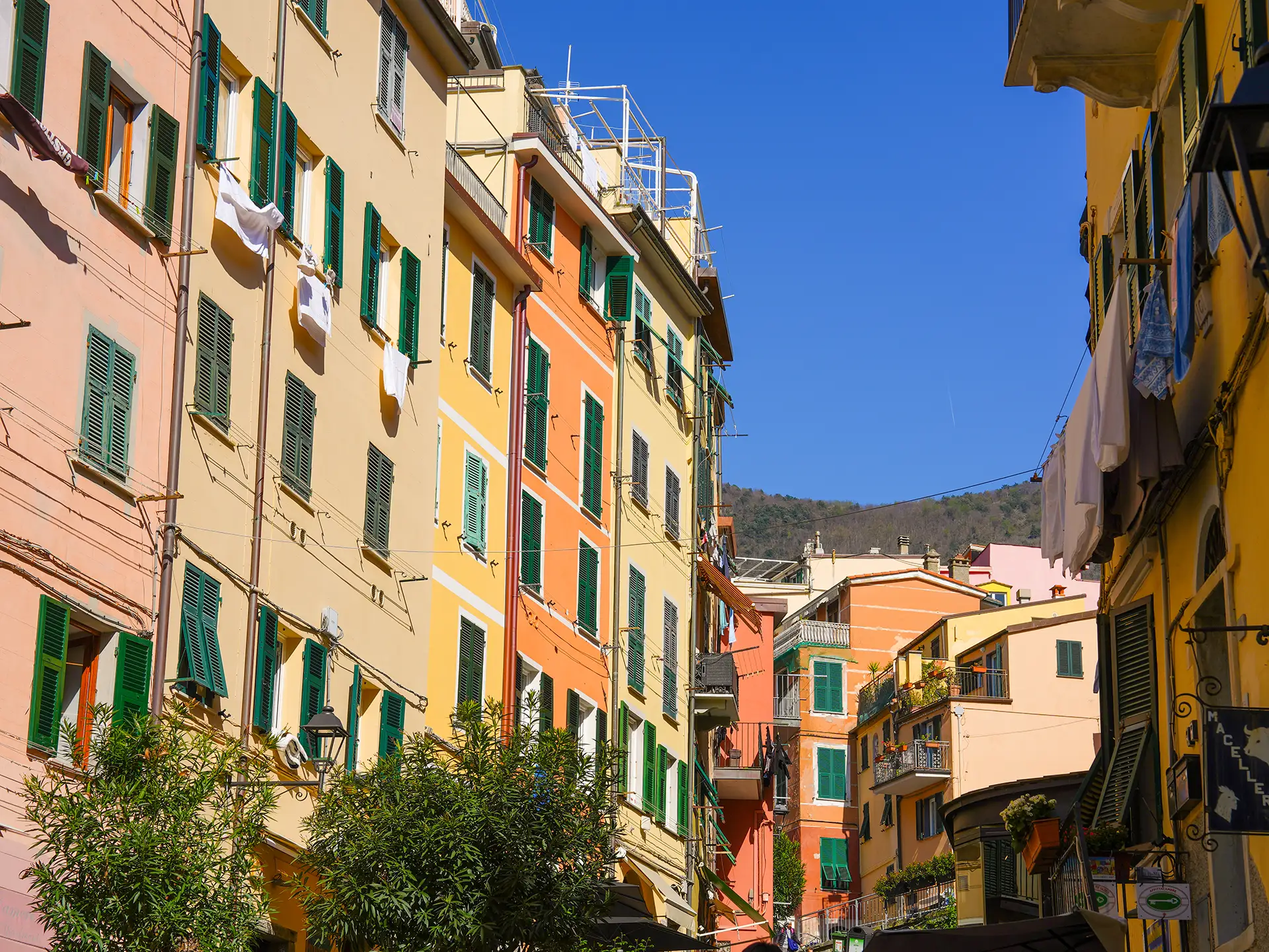
Tall, narrow, closely packed together and characterised by façades in shades of yellow, pink, red and ochre: the tower houses are among the most recognisable features of Riomaggiore and Manarola.
But there is much more to one of the most photographed sights in the Cinque Terre than a picture-perfect postcard view.
The shape of these buildings tells the story of how the villages developed in response to steep terrain and limited space, while the colours of their façades have gradually become an integral part of the historic centres’ identity and the Ligurian landscape.
Taking a closer look at these houses offers a fascinating insight into the local architecture and the relationship between the villages, the rocky coastline and the sea.
What Are Tower Houses?
The term “tower houses” refers to residential buildings that extend primarily upwards, usually over several floors, with a narrow footprint.
In Riomaggiore and Manarola, this type of construction creates a particularly compact urban landscape. Buildings stand close together, following the slope of the terrain, and are connected by carugi (traditional narrow Ligurian alleyways), staircases and narrow passageways.
This vertical layout is not something you notice only when admiring the villages from a distance. As you explore their streets, steep climbs and stairways are a constant feature, revealing just how closely the architecture is connected to the unique shape of the landscape.
It is not any single building that defines the appearance of Riomaggiore and Manarola, but rather the collection of houses rising side by side along the contours of the coastline.
Why Are the Houses in Riomaggiore and Manarola So Tall and Narrow?
The answer lies in the landscape.
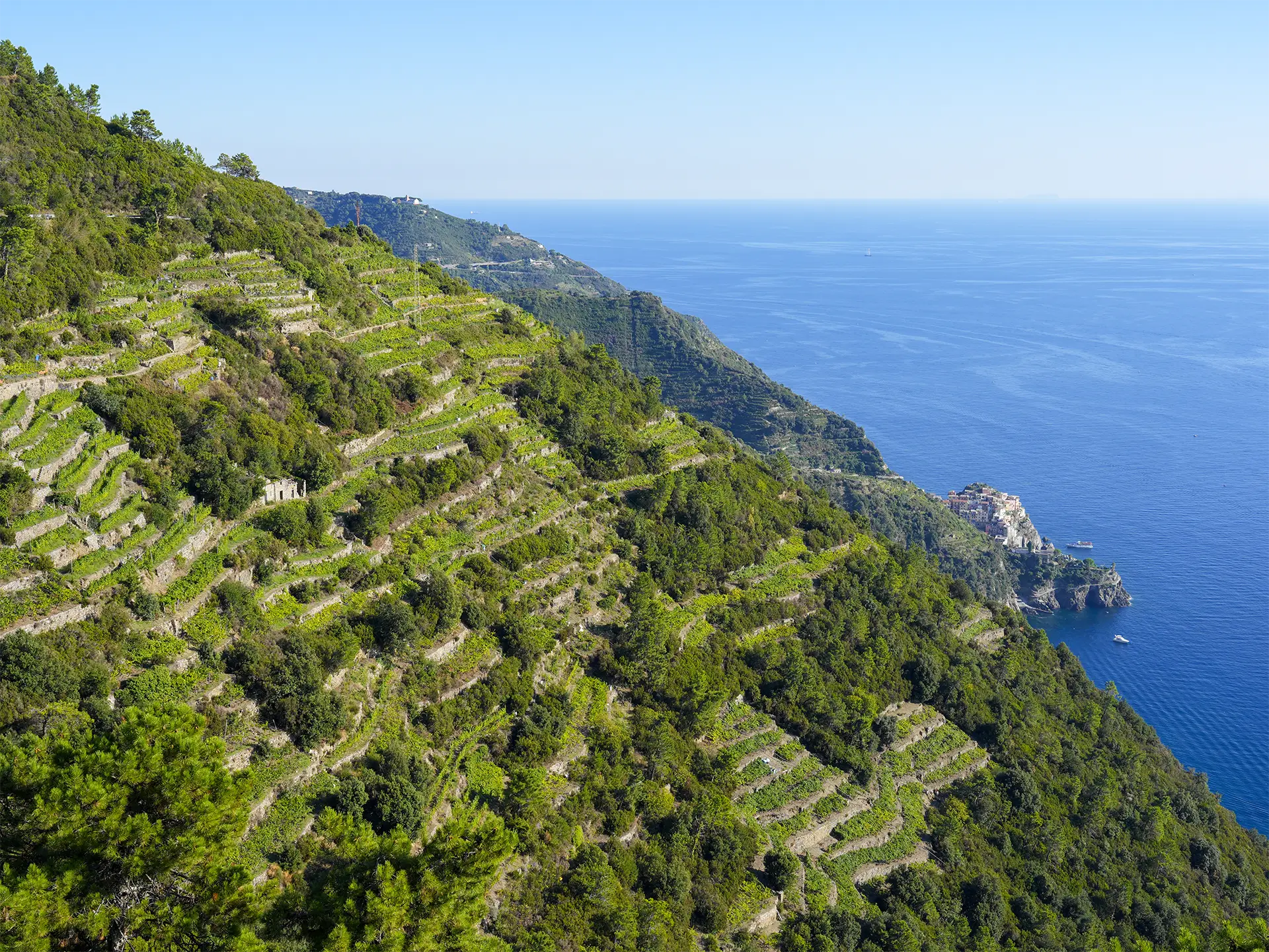
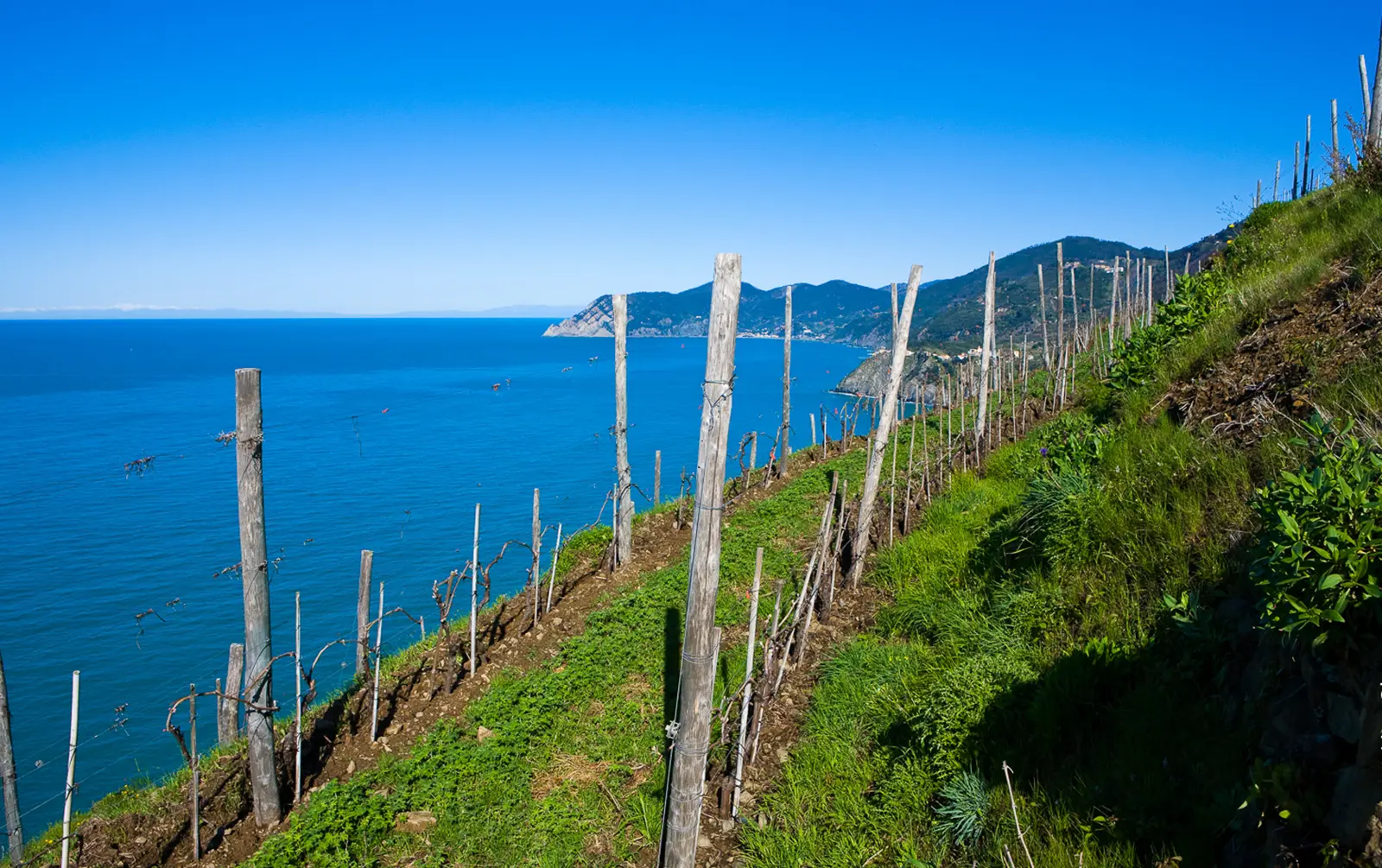
The Cinque Terre are located along a stretch of coastline characterised by steep slopes descending towards the sea and very little flat land. As a result, the villages had to adapt to the natural terrain, making the most of the available space by building upwards.
Riomaggiore stretches between two terraced hillsides that converge towards the sea. Its houses follow the natural contours of the valley, gradually climbing the slopes.
In Manarola, too, the layout of the village is closely linked to the natural landscape. The village developed along the course of the Groppo stream and is perched on a rocky promontory overlooking the sea.
Houses, alleyways, staircases, terraces and footpaths therefore share a small, sharply sloping area.
It is precisely this ability to adapt to the shape of the coastline that has created the compact, vertical layout that makes Riomaggiore and Manarola so instantly recognisable today.

A Unique Feature of Riomaggiore’s Tower Houses: Two Entrances
The steep terrain has influenced not only the height of the buildings, but also the way people enter them.
Riomaggiore’s tower houses often feature two entrances at different levels: one at the front, on the lower side of the building, and another at the rear, higher up the slope. This upper entrance is known in the local dialect as uservàn.
Originally, the rear entrance allowed residents to enter and leave their homes even during rough seas, when waves could surge up from the harbour towards the heart of the village. Over time, this architectural feature also became common in houses further from the sea, where the upper entrance provided quicker access to the paths leading into the surrounding countryside.
Some houses even have three entrances opening onto different streets.
It is a curious detail, but above all a practical example of how Riomaggiore’s architecture has adapted to the unique terrain and the everyday needs of its residents.
Why Are the Houses in Riomaggiore and Manarola So Colourful?
Red, yellow, pink, orange and ochre alternate across the façades, playing a defining role in the appearance of both villages.
Pastel shades are a characteristic feature of traditional Ligurian architecture. In Riomaggiore and Manarola, they are particularly striking because of the way the houses are arranged: built very close together and at different heights, their façades create colourful layers rising up the hillsides.
According to a popular local tradition, the different colours once helped fishermen recognise their own homes from the sea. It is one of the most widely told stories associated with the houses of the Cinque Terre and reflects the strong connection these villages have always had with the sea, although it is not a historically verified explanation for the origins of their varied colours.
What is certain is that today these colours are an important part of the local architectural heritage. To study and preserve the original colours and materials of historic buildings, the Cinque Terre National Park Authority developed the Progetto Colore (Colour Project), in collaboration with the Universities of Genoa and Florence and local municipal authorities.
The project involved environmental assessments, architectural surveys, historical research and studies of traditional colours and building materials, with the aim of protecting the identity of historic buildings and guiding their appropriate restoration.
Colour, therefore, is not simply what makes Riomaggiore and Manarola so photogenic: it is an essential part of their historic landscape.
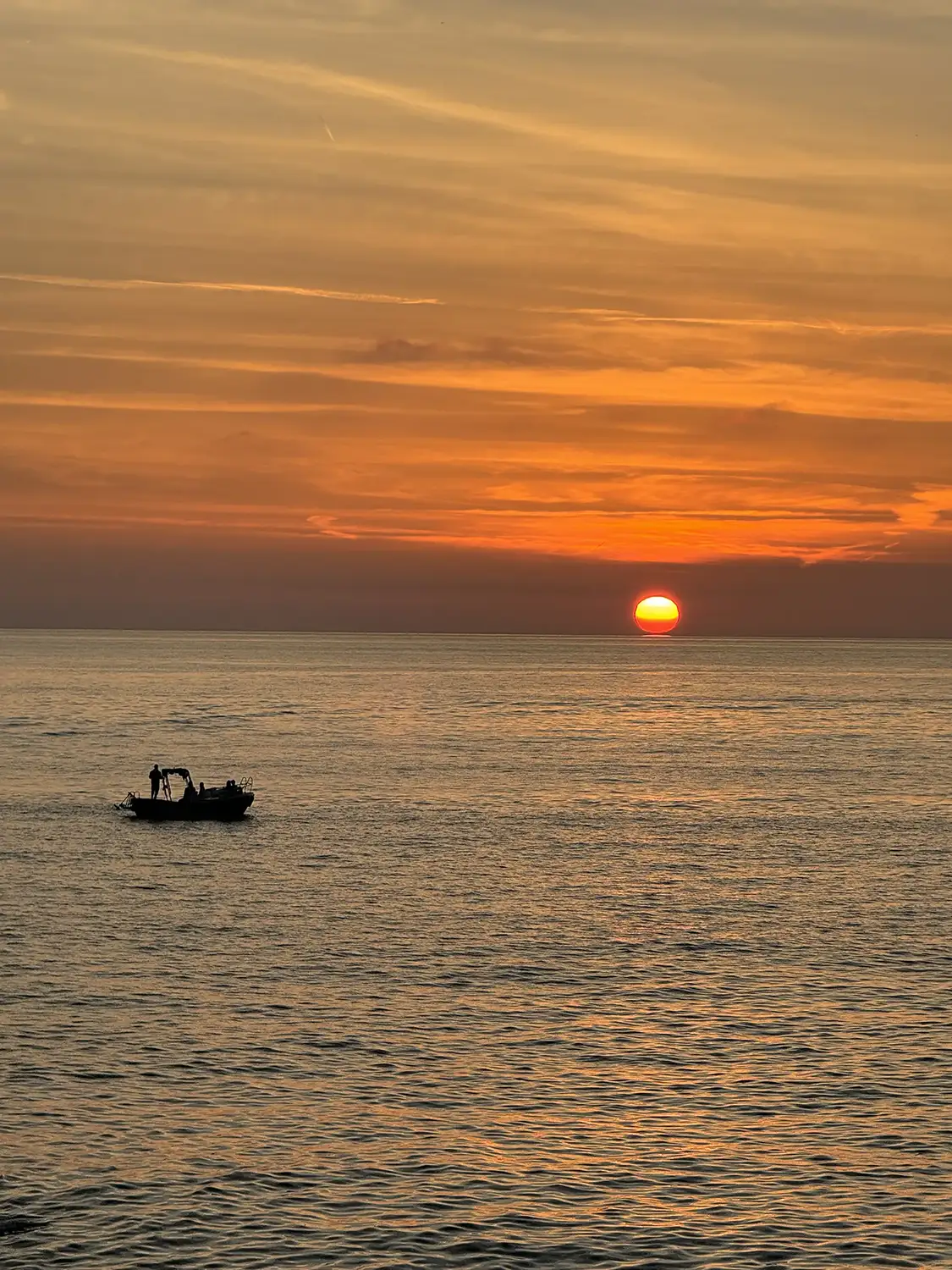
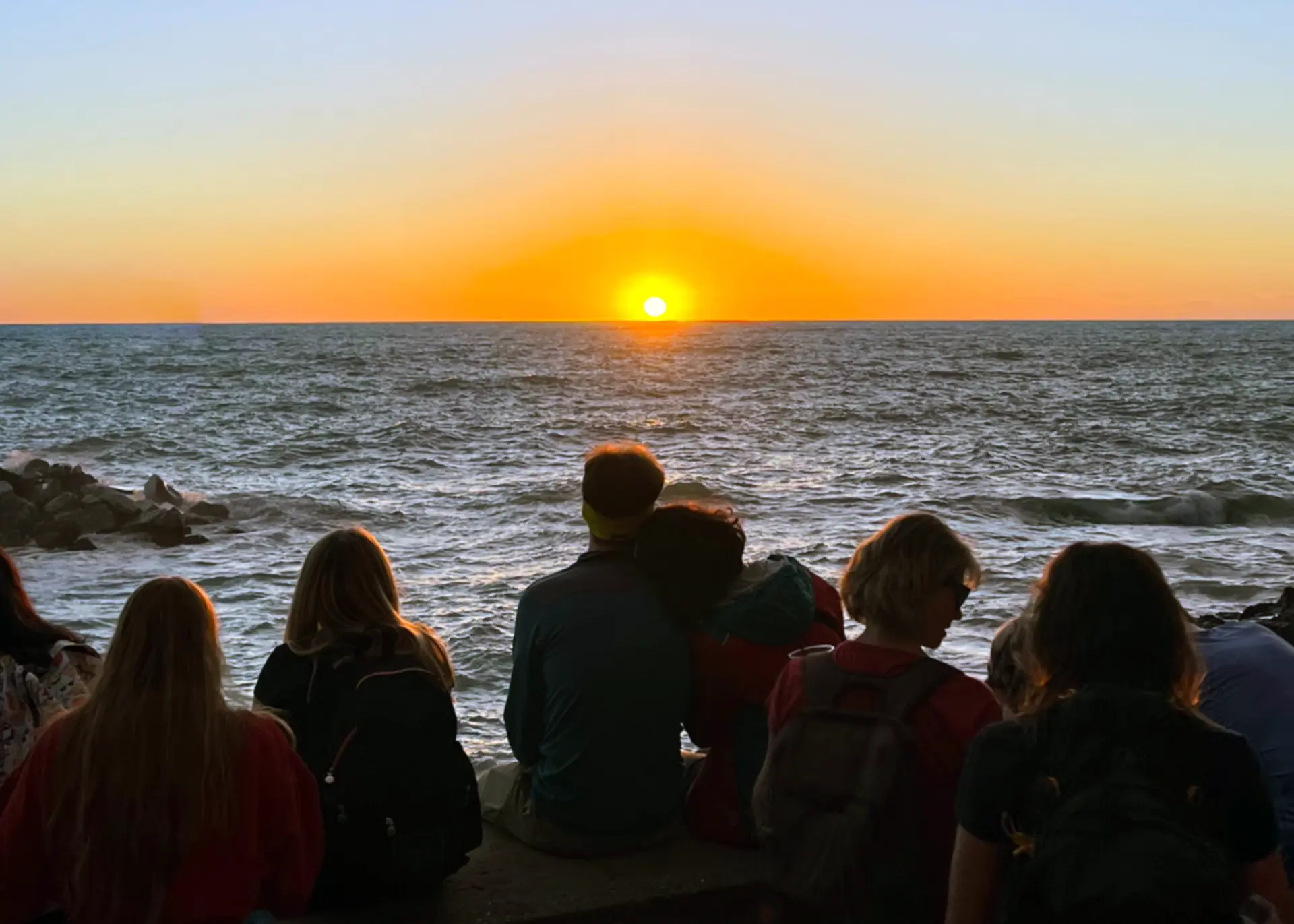
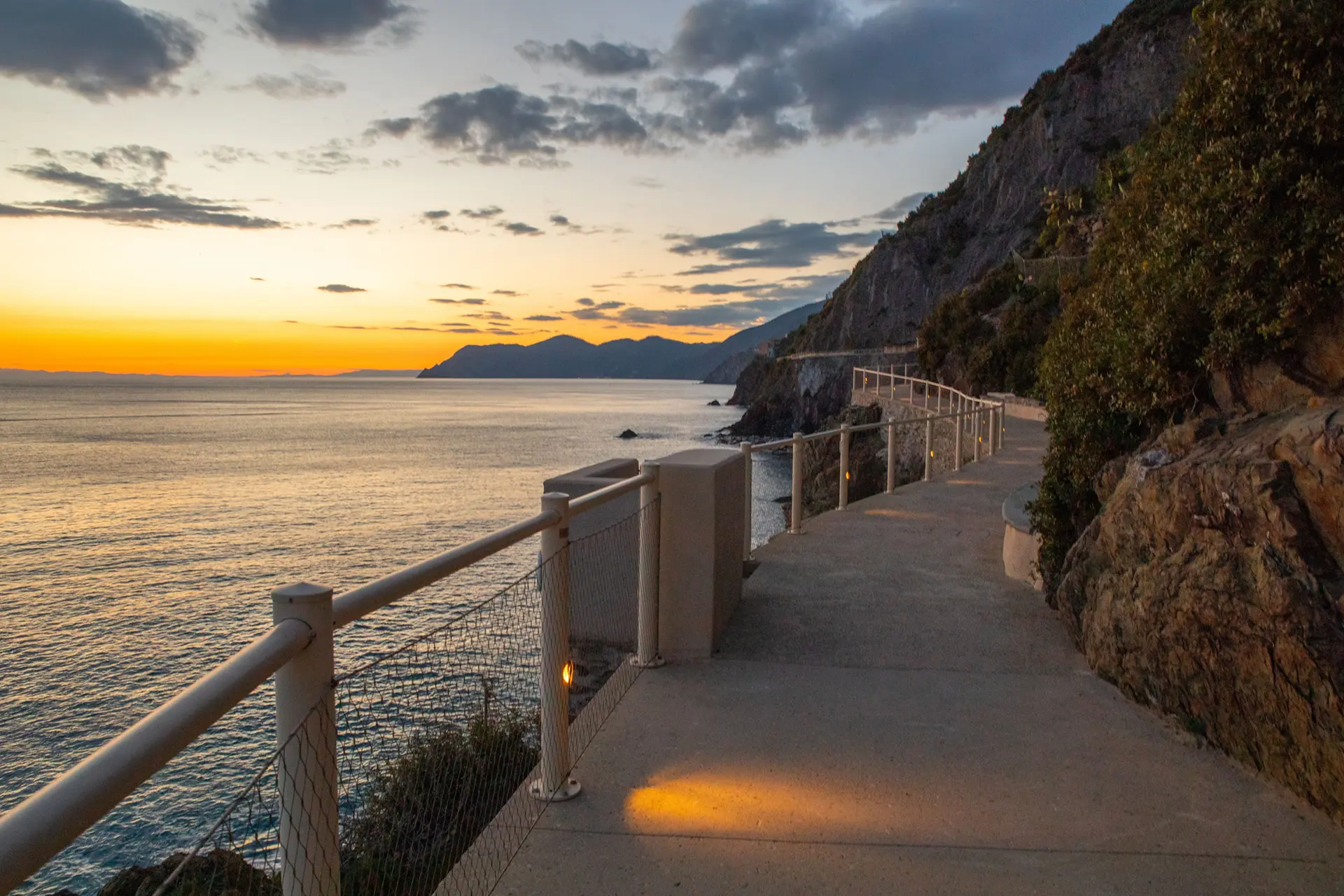
The changing light also transforms the appearance of the colours throughout the day. In the morning, the shades can appear more defined, while in the late afternoon and at sunset, the façades take on warmer tones.

Where to Admire the Tower Houses of Riomaggiore
One of the best places to appreciate Riomaggiore’s vertical layout is its small harbour.
Looking up towards the village from below, you can clearly see how the houses follow the slope and rise above one another, creating a colourful backdrop around the little harbour.
From here, it is well worth making your way uphill through the village.
As you walk along Via Colombo and explore the side streets, the perspective constantly changes. The façades seem to draw closer together, staircases and passageways appear, and you can take a closer look at how the buildings fit into the village’s urban layout.
Walking through these streets also reveals one of the most distinctive features of the tower houses: the difference in height between their various entrances, made possible by the steep slope of the village.
For a wider view, head up to Riomaggiore Castle. From this elevated position, you can look out over the village, the valley and the coastline, gaining a clearer understanding of how the houses are arranged.
Admiring Riomaggiore first from below and then from above is perhaps the best way to truly appreciate its vertical character.
Where to Admire the Colourful Houses of Manarola
In Manarola, one of the best-known panoramic viewpoints is Punta Bonfiglio.
From here, you can admire the village as a whole: the colourful houses seem to rise straight out of the rock, climbing upwards towards the terraced hillsides behind them.
The marina also offers an excellent perspective on the relationship between the buildings and the sea. Looking towards the village, you can see how the houses are built above the rocky promontory and how the settlement gradually extends uphill.
However, it is also worth exploring the heart of the village and climbing towards Piazza Papa Innocenzo IV and the Church of San Lorenzo.
Here, the postcard-perfect image of Manarola gives way to a quieter, more intimate atmosphere, with narrow alleyways, closely packed buildings, staircases and little corners that reveal how the tower houses remain part of everyday village life.

Architecture Worth Exploring Up Close
The colourful tower houses are among the most iconic symbols of the Cinque Terre, but to truly understand them, it is not enough to admire them from a single viewpoint.
From the sea, they reveal the vertical character of the villages. From above, they show the relationship between the houses, the coastline and the terraced hillsides. As you wander through the carugi, however, they become part of everyday life: doors, windows, staircases, entrances at different levels and narrow passageways remind you that Riomaggiore and Manarola are not simply picturesque backdrops, but living communities.
It is precisely this balance between architecture and landscape that makes these villages so special.
So, when you visit Riomaggiore and Manarola, try looking beyond the most famous photo opportunities. Explore the quieter streets, climb towards the upper parts of the villages and discover how the scenery changes from different perspectives.
The tower houses have a much richer story to tell when you take the time to appreciate how they interact with the landscape around them.